
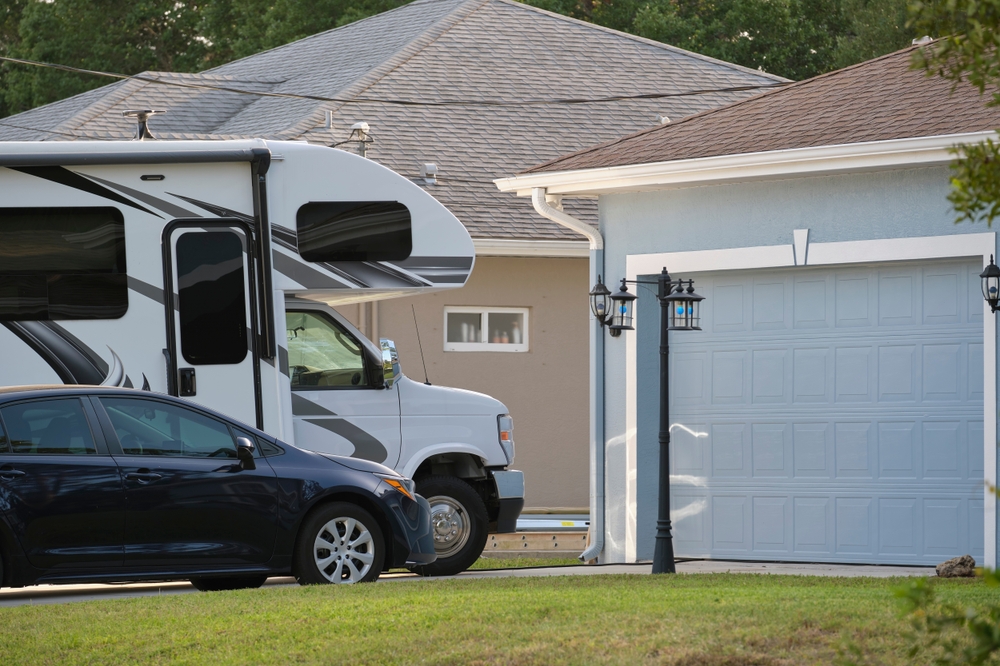
Managing a homeowners association often feels like balancing a tightrope between maintaining property values and preserving a sense of community. Of all the challenges an HOA board faces, few spark as much immediate passion and conflict as parking. It is a daily reality for every resident. When a car blocks a driveway, a commercial truck is parked on the curb for weeks, or guest spots are permanently occupied by a resident’s third car, tensions rise quickly.
At Proper HOA Management, we understand that parking issues are rarely just about cars; they are about fairness, aesthetics, and accessibility. A community that looks cluttered with haphazardly parked vehicles can suffer from lower property values, while a community with overly draconian rules can feel like a prison to its residents. Finding the balance is key.
Let’s explore the intricacies of HOA parking rules, specifically in terms of Texas law and practical community management. We will discuss how to distinguish between public and private streets, the legalities of towing, and how to enforce rules without creating a hostile environment. Whether you are a board member seeking to update your policy or a homeowner trying to understand your rights, this guide will provide the clarity you need.
Understanding the Authority | Public vs. Private Streets
The single most common point of confusion in HOA parking enforcement involves the ownership of the streets. Before a board can enforce any parking rule, they must definitively answer one question: Who owns the road?
Private Streets
If the developer built the streets and transferred them to the HOA as common elements, they are private streets. In this scenario, the HOA acts effectively as the government of those roads. The association has broad authority to set speed limits, restrict street parking entirely, ban specific types of vehicles, and contract towing services for violations. Gated communities almost always feature private streets.
Public Streets
In many Texas communities, the streets are dedicated to the city or county. If the streets are public, the HOA’s authority is significantly limited. Generally, an HOA cannot ticket or tow a vehicle parked legally on a public street, even if it violates the HOA’s preference for a clear curb. Jurisdiction over public streets belongs to local law enforcement.
However, there is a nuance here. While the HOA cannot control the street, they can often control the owner through the Covenants, Conditions, and Restrictions (CC&Rs). For example, if the CC&Rs state that “Owners shall not park commercial vehicles within the subdivision,” the HOA may be able to fine the homeowner for the violation, even if the vehicle is on a public street. This is a complex legal area, and we always recommend consulting with legal counsel or a professional management company like ours before attempting to enforce rules on public roadways.
Common HOA Parking Rules and Restrictions
Most parking disputes arise not from malicious intent, but from a misunderstanding of the rules. A well-drafted policy should address the most frequent friction points we see in Dallas-Fort Worth communities.
Commercial Vehicles
This is a frequent source of contention. Many residents drive company vehicles — branded trucks, vans with ladders, or cars wrapped in advertising. While necessary for their livelihood, these vehicles can disrupt the residential aesthetic that HOAs are tasked with preserving. Most governing documents prohibit parking “commercial vehicles” in view of the street.
The challenge lies in the definition. Is a standard pickup truck with a small logo on the door a “commercial vehicle”? What about a police cruiser? We recommend defining “commercial vehicle” explicitly in your parking policy — perhaps by weight, number of axles, or the presence of external equipment like racks and chemical tanks — to avoid ambiguity.
Recreational Vehicles (RVs) and Boats
Texas is home to many outdoor enthusiasts, but few HOAs allow RVs or boats to be parked permanently in driveways or on the street. The sheer size of these vehicles can block sightlines, creating safety hazards, and their presence is often viewed as an eyesore. Most policies allow for a temporary loading and unloading period — typically, 24 to 48 hours — before the vehicle must be moved to off-site storage.
Guest Parking Abuse
Guest parking spots are a finite resource intended for visitors, not for residents who have filled their garages with storage. A common issue we encounter is residents using guest spots as their permanent third or fourth parking space. To combat this, many communities implement a permit system or a time limit (for example, “Guest parking is limited to 72 consecutive hours”). Modern enforcement often uses “safelisting” software where residents must register their guest’s license plate for a specific duration.
Inoperable or Abandoned Vehicles
Nothing drags down curb appeal faster than a rusting car on flat tires sitting in a driveway for months. Most CC&Rs include provisions banning “inoperable” vehicles. It is crucial to define what “inoperable” means — usually, this includes vehicles with expired registration tags, flat tires, broken windows, or those that have not moved for a set number of days.
The Enforcement Process | From Notice to Towing
Enforcing parking rules requires a strict adherence to due process. In Texas, the legislature has provided specific protections for homeowners to prevent associations from overstepping. Skipping steps in the enforcement process can lead to lawsuits and invalid fines.
The Courtesy Notice
We believe the first step should always be educational. A friendly courtesy notice (or a “soft” warning) placed on the vehicle or sent to the owner often resolves the issue. Many residents simply forget the rules or don’t realize they are in violation.
The Chapter 209 Letter
If the violation persists, Texas Property Code Chapter 209 comes into play. Before an HOA can levy a fine, suspend common area privileges, or charge the owner for property damage, they must send a certified letter (often called a “209 Letter”). This letter must:
- Describe the violation.
- State the proposed sanction (fine amount).
- Inform the owner of their right to cure the violation within a specific timeframe (usually 30 days) to avoid the fine.
- Inform the owner of their right to request a hearing before the board.
Note that for “uncurable” violations (like shooting fireworks) or violations that pose a threat to public safety, the right to cure may not apply, but the right to a hearing usually does. Parking violations can fall into a gray area depending on whether they are continuous (a stored boat) or transitory (parking on the grass).
Towing Vehicles
Towing is the “nuclear option” of parking enforcement. It is immediate, expensive for the owner, and generates significant anger. Consequently, it is heavily regulated by the Texas Towing and Booting Act (Texas Occupations Code Chapter 2308).
For an HOA to legally tow a vehicle:
- Signage: There must be compliant signage at every entrance to the facility (or parking area) stating that unauthorized vehicles will be towed at the owner’s expense. The sign must include the towing company’s name and phone number and be permanently mounted.
- Notice: In many cases, specifically on private property, the HOA must provide 24-hour notice before towing, usually via a sticker on the vehicle. There are exceptions for blocking fire lanes, fire hydrants, or entry/exit gates, where towing can often be immediate.
- Authorization: The towing company cannot just patrol and tow at will (a practice known as “predatory towing”). A representative of the HOA must usually authorize the specific tow.
We strongly advise boards to treat towing as a last resort. It is far better to resolve the issue through fines and communication than to leave a resident stranded without a vehicle.
Creating a Fair and Effective Parking Policy
If your community is struggling with parking wars, it might be time to revise your policy. A policy that was written 20 years ago may not account for modern realities, such as the increase in multi-generational households with more cars per driveway.
Conduct a Parking Audit
Before writing new rules, understand the problem. Are there physically enough spaces? Is the issue isolated to one street? We recommend conducting a parking inventory to count the total available legal spaces versus the number of registered vehicles in the community. This data allows the board to make informed decisions rather than reacting to anecdotes.
Use Technology
Paper permits and hangtags are becoming obsolete. We encourage communities to utilize digital parking management solutions. These platforms allow residents to register guests online, giving the board and patrol companies real-time data on who belongs in a spot. This reduces the likelihood of accidental tows and provides a clear audit trail for enforcement.
Clear Communication
A rule that nobody knows is a rule that cannot be followed. When you update your parking policy, do not just bury it in the portal. Send out email blasts, discuss it at the annual meeting, and consider posting temporary signage to alert residents of changes. Transparency builds trust.
Defining “Commercial” Clearly
As mentioned earlier, ambiguity is the enemy of enforcement. Your policy should be specific. For example: “Commercial vehicles are defined as any vehicle exceeding 1 ton payload capacity, OR displaying commercial lettering larger than 4 inches in height, OR equipped with external racks carrying visible tools or materials.” Specificity protects the board from accusations of selective enforcement.
The Role of the Management Company
This is where Proper HOA Management steps in. Self-managed boards often find parking enforcement to be the quicksand of their tenure. It is emotionally draining to fine your neighbor or order a tow for a car parked in front of your friend’s house.
We act as the neutral third party. Our team handles the inspections, issues the notices, and fields the angry phone calls. We verify that every action taken is in strict compliance with the Texas Property Code and the association’s specific governing documents. We also help boards draft resolutions that stand up to scrutiny.
Furthermore, we manage the vendors. We ensure the towing company has the proper insurance and licenses. We verify that the patrol service is actually checking the lot when they say they are. We take the logistical burden off the volunteers so they can focus on the bigger picture of community leadership.
Best Practices for Resolving Parking Disputes
Even with clear rules, disputes will happen. Here is how we recommend handling them to de-escalate conflict.
The Hearing Process
When an owner requests a hearing regarding a parking fine, view it as an opportunity, not a trial. Listen to their side. Perhaps their driveway was being repaired, forcing them to park on the street. Perhaps they had a medical emergency. Boards have the authority to waive fines, and doing so in cases of genuine hardship creates immense goodwill.
Alternative Parking Solutions
If your community is genuinely parking-starved, look for creative solutions. Can the HOA rent spaces at a nearby commercial lot for overflow parking? Can you restripe the clubhouse lot to add more spaces? Can you allow street parking on only one side of the road to maintain emergency vehicle access while maximizing capacity?
Consistency is King
The fastest way to get sued is to enforce the rules selectively. You cannot ignore the board president’s RV while towing a regular member’s boat. Enforcement must be uniform. This is another area where professional management is vital; we apply the rules blindly to the violation, not the person.
Proper HOA Management | Your Partner in Resident Satisfaction
Parking will likely always be a topic of discussion in homeowners associations. As density increases and households grow, the pressure on asphalt isn’t going away. However, chaos is not inevitable. By establishing clear, reasonable rules, understanding the legal boundaries of public vs. private streets, and enforcing policies with consistency and empathy, an HOA can turn a source of conflict into a system that works.
At Proper HOA Management, we have decades of experience helping Texas communities navigate these exact challenges. We know the difference between a nuisance and a necessity, and we know how to protect the board while serving the residents.
Contact Proper HOA Management today. Let us help you bring order to your streets and peace of mind to your board.
FAQ
Q. Can an HOA tow a car from a public street in Texas?
Generally, no. An HOA usually does not have the authority to tow vehicles from public streets, as these are under the jurisdiction of the city or county. However, the HOA may still be able to fine the vehicle owner if the governing documents prohibit parking on the street, provided the vehicle belongs to a resident subject to the CC&Rs.
Q. Does the HOA have to give notice before towing a vehicle?
Yes, in most cases. The Texas Towing and Booting Act and general property laws typically require proper signage at facility entrances and, for many parking violations, a specific notice (like a sticker) on the vehicle 24 hours prior to towing. Immediate towing is usually reserved for safety hazards like blocking fire lanes or entry gates.
Q. Can the HOA tell me I can’t park my work truck in my own driveway?
Yes, if your CC&Rs prohibit commercial vehicles. When you purchased your home, you agreed to abide by the deed restrictions. If those restrictions ban commercial vehicles from being visible, the HOA can require you to park it in the garage or off-site, regardless of whether it is essential for your employment.
Q. What is a “209 Letter” and why did I get one for parking?
A “209 Letter” refers to the certified notice required by Chapter 209 of the Texas Property Code. It informs you of a violation (like illegal parking), the proposed fine, and your right to cure the violation or request a hearing. Receiving this letter is a required legal step before the HOA can impose a fine or take further enforcement action.
Q. Can the HOA limit how many cars I own?
The HOA generally cannot limit the number of cars you own, but they can limit how many cars you park within the community boundaries. If you have more cars than your garage and driveway can hold, and street parking is prohibited, you will need to find off-site storage for the excess vehicles.
Q. Are “patrol services” allowed to issue speeding tickets in an HOA?
Private security or patrol services hired by an HOA generally cannot issue legally binding traffic citations (like a police officer would) that affect your driving record. However, they can issue notice of violations for breaking HOA rules (like speed limits on private streets), which can result in monetary fines from the association.